Why Gold and the US Dollar Often Move in Opposite Directions
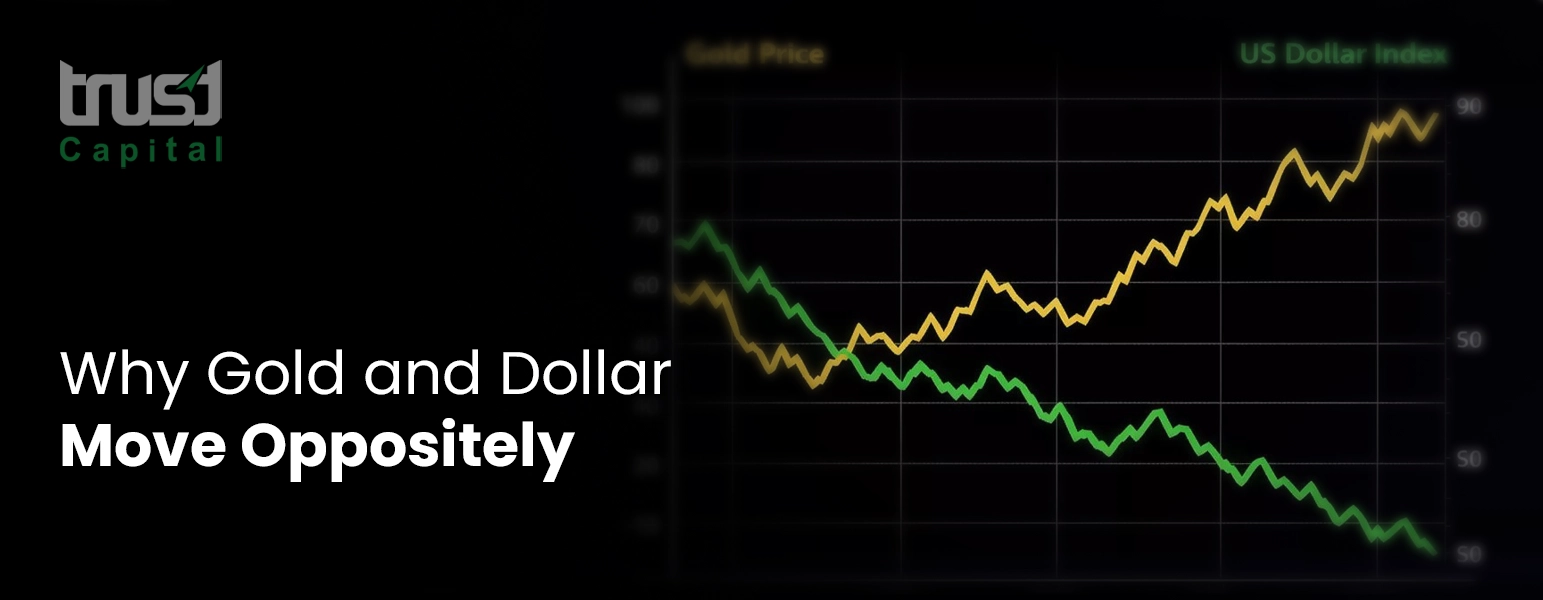
Gold and the US dollar have a long-standing inverse relationship that plays a critical role in global financial markets. Traders and investors frequently observe that when the dollar strengthens, gold prices weaken and when the dollar declines, gold often rises. This dynamic, known as the Gold Dollar Correlation, is a core concept in gold price analysis and understanding broader gold market trends.
Understanding the Gold Dollar Correlation
The Gold Dollar Correlation exists because gold is globally priced in US dollars. Changes in the dollar’s value directly affect gold’s affordability and demand worldwide.
Key reasons behind this correlation include:
-
Gold is denominated in USD across global markets
-
A stronger dollar makes gold more expensive for non-USD buyers
-
A weaker dollar increases global gold demand
-
Currency movements influence international capital flows
These factors collectively shape the long-term Dollar Gold Trend.
Why Gold Is Considered a Safe Haven Asset
Gold has maintained its reputation as a safe haven for centuries. During periods of financial uncertainty, investors often shift away from currencies and risk assets toward gold.
Gold Safe Haven demand typically rises during:
-
Economic slowdowns or financial instability
-
High inflation or currency devaluation
-
Geopolitical tensions and global uncertainty
-
Stock market volatility
This behavior helps explain why gold often outperforms when confidence in the US dollar weakens.
Interest Rates and Their Influence on the Dollar Gold Trend
Interest rates significantly impact both the US dollar and gold prices. Higher interest rates tend to support the dollar, while lower rates often favor gold.
How interest rates affect gold price movement:
-
Rising rates increase the appeal of yield-bearing assets
-
Higher yields strengthen the dollar and pressure gold prices
-
Falling rates reduce the opportunity cost of holding gold
-
Lower rates often support bullish gold market trends
Understanding this relationship is essential for accurate gold price analysis.
Inflation, Currency Value, and Gold Price Movement
Inflation directly affects the purchasing power of fiat currencies. When inflation rises, the real value of the US dollar declines, increasing gold’s appeal as a hedge.
Gold is commonly used to hedge against:
-
Rising consumer prices
-
Declining currency purchasing power
-
Long-term inflationary pressure
-
Monetary expansion and excess liquidity
As a result, inflation data remains a key input for top gold analysis.
Gold Market Trends Across Economic Cycles
Economic cycles influence the balance between gold and the dollar. During strong growth periods, capital often flows toward the dollar and equities. During downturns, gold demand typically increases
Common gold market trends across cycles include:
-
Risk-on environments favor the dollar over gold
-
Risk-off periods increase safe-haven gold demand
-
Market uncertainty boosts gold price movement
-
Stability often limits gold upside
These patterns shape the broader gold market outlook.
Gold Price Analysis and the Role of Investor Sentiment

Investor sentiment plays a crucial role in short- and medium-term gold price behaviour. When market participants seek safety, gold demand rises. When risk appetite increases, gold may face pressure.
Indicators often used in gold price analysis include:
-
Market volatility measures
-
Risk-on vs risk-off sentiment
-
Equity and bond market flows
-
Currency strength indicators
Combining sentiment with technical and macro analysis leads to more reliable insights
Gold Market Outlook Without Speculative Forecasts
Rather than relying on precise predictions, many traders focus on long-term drivers shaping the gold market outlook. These structural factors influence gold’s role in diversified portfolios.
Key long-term drivers of the gold market include:
-
Central bank monetary policy
-
Inflation and currency stability
-
Global economic conditions
-
Investor risk perception
This approach helps traders adapt to changing conditions without depending on speculative models.
Best Gold Trading Approaches in Dollar-Driven Markets
Understanding the inverse relationship between gold and the dollar allows traders to structure more effective strategies.
Best gold trading practices often include:
-
Monitoring USD strength and weakness
-
Combining technical and fundamental analysis
-
Managing risk during high volatility periods
-
Trading through reliable platforms
Best Gold Prices and Investment Options
Access to the best gold prices depends on liquidity, platform transparency, and dealer reliability.
Common gold investment options include:
-
Spot gold and CFDs for active traders
-
ETFs for portfolio diversification
-
Physical gold from top rated gold dealers
-
Mining equities, depending on the best gold stock to buy
Each option suits different investment goals and risk profiles.
Conclusion
The inverse relationship between gold and the US dollar remains one of the most consistent patterns in financial markets. By understanding the Gold Dollar Correlation, traders and investors can better interpret gold market trends, manage risk, and identify opportunities.
Whether focusing on gold price movement, best gold trading strategies, or long-term positioning, recognizing how gold and the US dollar interact is essential for informed decision-making.