Global Energy Chokepoints: How the World’s Most Critical Shipping Routes Can Shake Oil
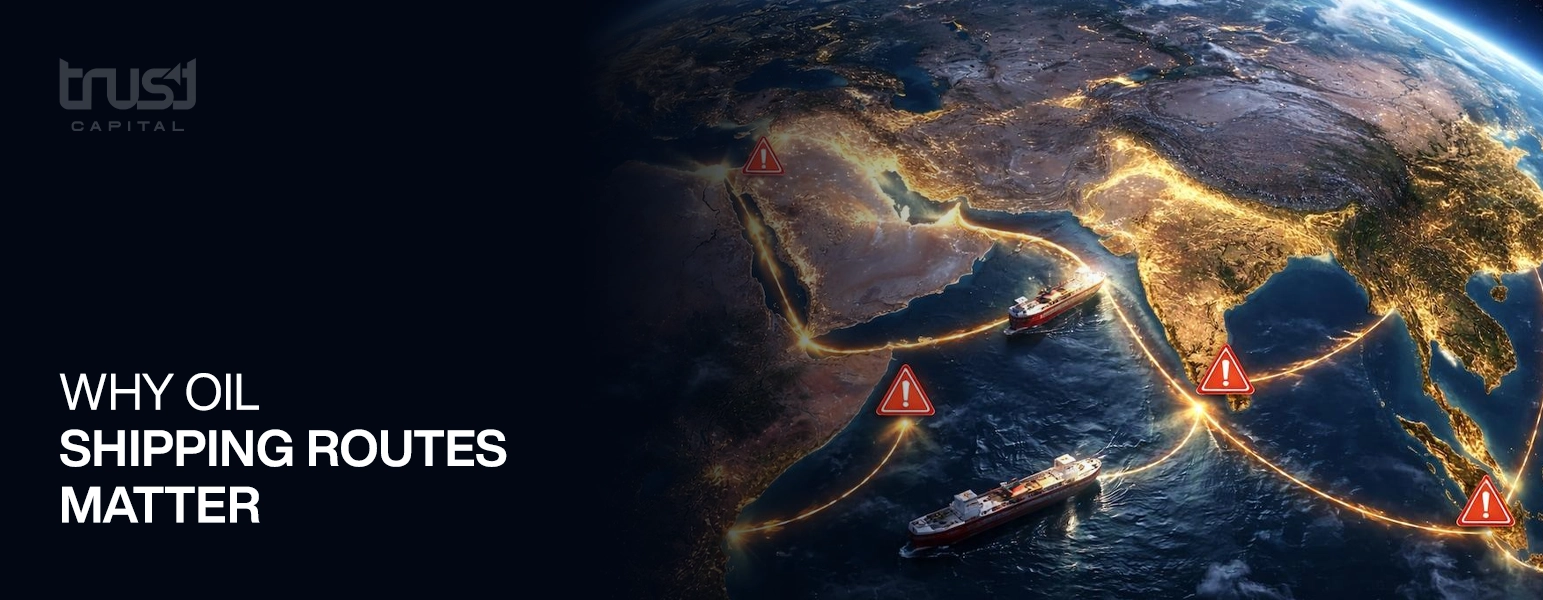
Oil is one of the world's most important, traded commodities, but getting crude oil from producers to consumers depends on a surprisingly small number of critical shipping routes.
This narrow maritime passage known as energy chokepoints connect major producing regions with refineries, storage hubs and consuming markets. When one of these routes is disrupted, even temporarily, the impact can spread rapidly across global oil markets.
For traders, investors and businesses, understanding these routes is essential for assessing Oil Chokepoint Risks, Oil Shipping Impact, and the broader Oil Price Risk 2026.
A conflict, military confrontation, accident, sanctions regime, infrastructure failure or even the threat of disruption can increase shipping costs, delay deliveries and push crude prices higher.
This article examines the world's most important Global Energy Routes, explains why they matter, and explores how disruptions could influence oil prices in 2026.
What Is an Energy Chokepoint?
An energy chokepoint is a narrow or strategically important transportation route through which a large volume of oil, gas or other energy products must pass.
The importance of a chokepoint comes from concentration.
If ships can easily avoid a route, disruption may have a limited impact. But when there are few practical alternatives, even a relatively small interruption can create significant market uncertainty.
Major energy chokepoints include:
-
Strait of Hormuz
-
Strait of Malacca
-
Bab el-Mandeb
-
Suez Canal
-
Turkish Straits
-
Panama Canal
-
Cape of Good Hope as an alternative route
These locations form part of the world's most important Global Energy Routes.
Why Oil Chokepoints Matter
Global oil production is geographically concentrated, while consumption is spread across continents.
Middle Eastern producers, for example, supply major markets in Asia and Europe. Their crude often has to travel through narrow maritime passages before reaching refineries.
This creates a fundamental vulnerability.
If transportation through one of these routes becomes more expensive or uncertain, the market can price in the possibility of reduced supply even before actual barrels are removed from the market.
That is why geopolitical developments can sometimes cause oil prices to rise immediately.
The market is pricing the risk of future disruption, not simply today's physical supply.
Strait of Hormuz: The World's Most Important Oil Chokepoint
The Strait of Hormuz is arguably the most important energy chokepoint in the world.
It connects the Persian Gulf with the Gulf of Oman and the Arabian Sea.
Major oil-producing countries surrounding the Persian Gulf depend on this route to export crude and petroleum products to global markets.
Saudi Arabia, Iraq, the United Arab Emirates, Kuwait, Qatar and Iran all have energy infrastructure connected to the region.
Because of the enormous volume of energy transported through the strait, any serious disruption could have major consequences for global oil prices.
Why Hormuz Creates Oil Chokepoint Risks
The risks include:
-
Military conflict
-
Vessel attacks
-
Mining threats
-
Political escalation
-
Sanctions
-
Shipping restrictions
-
Insurance-cost increases
-
Temporary closure or reduced traffic
The most important point for traders is that the market does not need a complete closure to react.
Even threats to shipping can increase the geopolitical risk premium embedded in crude prices.
That makes Hormuz one of the most important areas to monitor for Top Oil Route Impact.
Strait of Malacca: Asia's Critical Oil Gateway
The Strait of Malacca connects the Indian Ocean with the Pacific Ocean.
It is one of the most important shipping routes for energy supplies heading toward China, Japan, South Korea and other Asian economies.
Asia is the world's largest oil-consuming region, while much of its supply comes from the Middle East.
That makes Malacca strategically important.
A serious disruption could force vessels to use longer alternative routes around Indonesia, increasing transportation time and costs.
The Oil Shipping Impact
Longer shipping routes can create several effects:
-
Higher freight rates
-
Higher insurance costs
-
Longer delivery times
-
Greater fuel consumption
-
Increased regional supply uncertainty
The result can be higher delivered oil prices even if global crude production remains unchanged.
This is an important example of Energy Route Impact.
Bab el-Mandeb: The Red Sea's Energy Gateway
Bab el-Mandeb connects the Red Sea with the Gulf of Aden.
The route is strategically important because ships traveling between the Indian Ocean and the Mediterranean can use the Red Sea and Suez Canal to significantly shorten their journey.
Security threats in the Red Sea have demonstrated how quickly shipping companies can change their behaviour.
When vessels avoid the area, many ships instead travel around the Cape of Good Hope.
That adds thousands of nautical miles to some journeys.
Why Longer Routes Matter
A longer route means:
-
More fuel consumption
-
Higher crew and operating costs
-
Higher insurance premiums
-
Fewer available ships
-
Longer delivery times
These factors can tighten effective shipping capacity.
Therefore, even without a direct loss of oil production, disruption can influence the global oil market.
Suez Canal: Connecting Europe and Asia
The Suez Canal is another major global energy route.
It connects the Mediterranean Sea with the Red Sea and provides a shorter route between Europe and Asia.
For oil markets, the canal is particularly important for shipments moving between the Middle East, Europe and other international markets.
If the canal becomes unavailable, vessels may need to travel around Africa.
That can substantially increase voyage times.
The Oil Shipping Impact therefore extends beyond crude prices.
It can also affect refined-product markets, freight rates and refinery economics.
Turkish Straits: A Critical Black Sea Passage
The Turkish Straits particularly the Bosporus and Dardanelles connect the Black Sea with the Mediterranean.
They are important for energy exports from the Black Sea region.
The route has geopolitical significance because several major energy-producing and exporting regions depend on access through the Black Sea.
Any restrictions or disruptions could affect the flow of crude and petroleum products toward international markets.
For traders following Top Oil Transit News, developments around the Turkish Straits can therefore provide important clues about regional supply risks.
Panama Canal: A Different Kind of Energy Chokepoint
The Panama Canal is not primarily associated with Middle Eastern crude exports, but it has become increasingly important for global energy logistics.
The canal provides a shortcut between the Atlantic and Pacific Oceans.
Changes in water availability have previously caused restrictions on vessel traffic.
When capacity is reduced, ships may need to take longer routes.
This demonstrates an important aspect of modern energy transportation:
Not every oil chokepoint risk is caused by war or politics.
Climate conditions, drought, infrastructure problems and congestion can also affect energy routes.
Cape of Good Hope: The Alternative That Comes With a Cost
When ships avoid the Suez Canal or Red Sea, one major alternative is the Cape of Good Hope route around southern Africa.
This route is considerably longer for many journeys.
It is therefore better viewed as an alternative rather than a perfect replacement.
The additional distance can increase:
-
Transit times
-
Fuel costs
-
Vessel requirements
-
Freight rates
-
Delivery uncertainty
This means that even when oil continues moving, the Energy Route Impact can still be significant.
How Chokepoints Influence Oil Prices
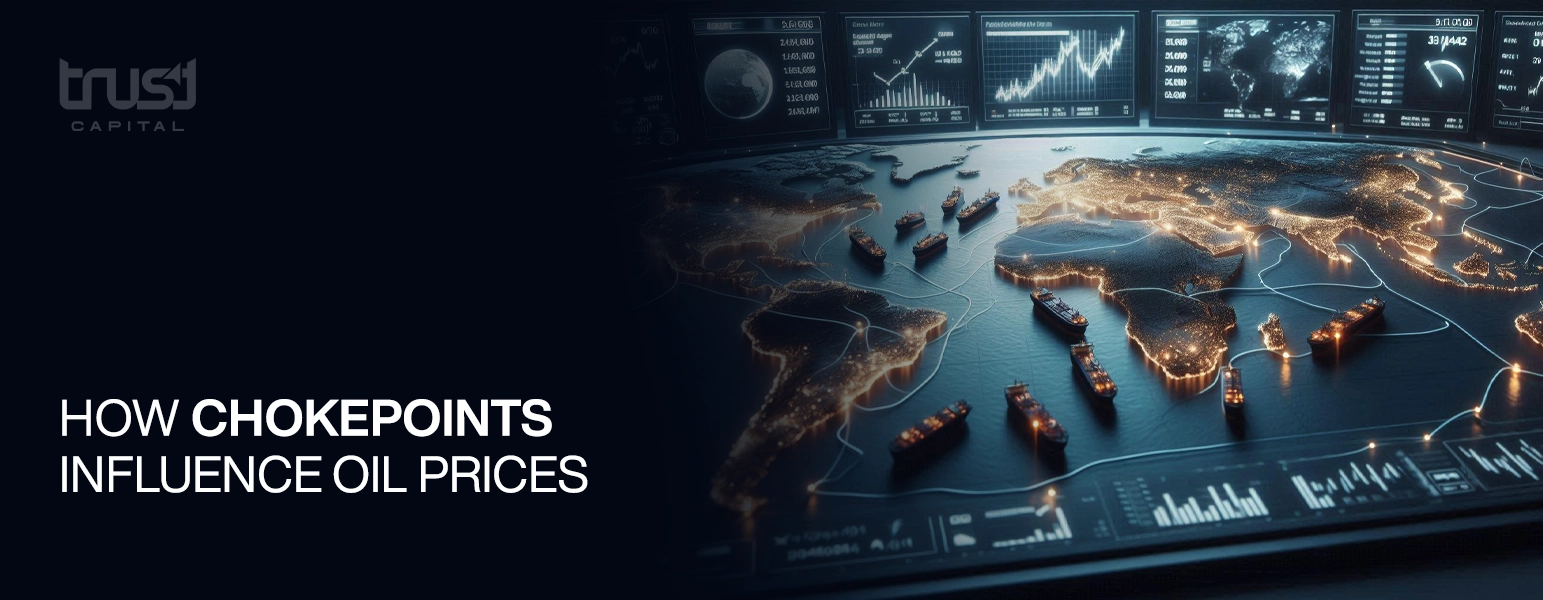
The relationship between shipping disruptions and oil prices is not always straightforward.
A disruption can affect prices through several channels.
1. Physical Supply Risk
The most obvious impact occurs when oil cannot reach consumers.
If a major exporting region becomes isolated from international markets, available supply can fall.
Lower supply combined with unchanged demand generally creates upward pressure on prices.
2. Risk Premium
Oil prices can also rise because traders anticipate potential shortages.
For example, if tensions increase around a major chokepoint, traders may price in the probability of future disruption.
This creates a geopolitical risk premium.
3. Freight Costs
Higher shipping costs increase the total cost of delivering crude.
Even if the benchmark oil price does not immediately rise significantly, regional physical prices can change.
4. Insurance Costs
War-risk insurance can become substantially more expensive when shipping security deteriorates.
Those costs can ultimately be reflected in oil and petroleum-product prices.
5. Longer Transit Times
Longer voyages reduce the effective availability of tankers.
If vessels spend more time transporting existing cargoes, fewer ships are available for new shipments.
That can push freight rates higher.
Top Oil Trade Risks in 2026
The Top Oil Trade Risks for 2026 extend beyond individual chokepoints.
Traders should consider several interconnected risks:
-
Middle East geopolitical escalation
-
Shipping attacks
-
Sanctions
-
Export restrictions
-
OPEC+ production decisions
-
Pipeline disruptions
-
Extreme weather
-
Canal congestion
-
Tanker shortages
-
Higher insurance costs
-
Regional military conflicts
-
Strategic stockpile changes
These risks can interact with each other.
For example, a geopolitical crisis can increase both oil prices and shipping costs at the same time.
Oil Price Risk 2026: Why Volatility Could Remain High
The Oil Price Risk 2026 outlook depends on the balance between global supply, demand and geopolitical risk.
Even when supply and demand appear relatively stable, a chokepoint event can quickly change expectations.
This is particularly important for Brent crude because international oil pricing is highly sensitive to geopolitical developments affecting global trade routes.
The market can move before physical supply changes.
That is why traders should monitor geopolitical headlines alongside inventory data and production forecasts.
How Traders Can Monitor Energy Route Risks
For traders looking for the Best Oil Market Risk indicators, several categories deserve attention.
Geopolitical News
Watch for developments involving:
-
Middle Eastern conflicts
-
Iran
-
Saudi Arabia
-
Iraq
-
Israel
-
Yemen
-
Russia
-
Turkey
-
China
Shipping Data
Changes in tanker traffic can provide clues about emerging disruptions.
Important indicators include:
-
Vessel movements
-
Freight rates
-
War-risk insurance
-
Port congestion
-
Shipping rerouting
-
Delivery times
Oil Fundamentals
Geopolitical developments should always be compared with:
-
Global inventories
-
OPEC+ production
-
U.S. production
-
Refinery demand
-
Chinese demand
-
Global economic growth
-
Strategic petroleum reserves
This helps traders distinguish between a temporary risk premium and a genuine supply shortage.
The Difference Between a Headline Shock and a Supply Shock
One of the most important concepts in oil trading is distinguishing between a headline shock and a physical supply shock.
A headline shock occurs when markets fear that supply could be disrupted.
A physical supply shock occurs when barrels actually disappear from the market.
These two events can produce very different outcomes.
Oil prices may initially surge on a headline, but if physical supply remains available and the threat fades, prices can quickly retrace.
On the other hand, a sustained disruption that removes significant volumes from the market can create a much stronger and longer-lasting price move.
This distinction is essential when assessing the Best Oil Trade Risk.
What Could Cause the Biggest Oil Price Move?
The largest potential price shocks would likely involve a disruption affecting one of the world's major oil-export routes while spare production capacity is limited.
A combination of:
major chokepoint disruption + reduced spare capacity + strong demand
would create a particularly bullish environment for crude.
Conversely:
limited disruption + weak demand + ample inventories
could make any initial price spike much less durable.
Global Energy Routes and Forex Markets
Energy transportation risks can also influence currencies.
Oil-importing countries may experience pressure on their currencies if energy costs rise sharply.
Higher oil prices can increase import bills and worsen trade balances.
Oil-exporting countries, meanwhile, can benefit from higher energy revenues.
This is why traders following Best Oil Transit FX developments should monitor relationships between crude prices and currencies.
The impact is particularly relevant for economies heavily dependent on energy imports or exports.
Top Energy Route News to Watch
For investors and traders looking for Top Energy Route News, the most important developments include:
-
Strait of Hormuz security
-
Red Sea shipping conditions
-
Suez Canal traffic
-
Strait of Malacca congestion
-
Turkish Strait activity
-
Panama Canal restrictions
-
OPEC+ announcements
-
Major sanctions
-
Tanker freight rates
-
Oil inventory reports
-
Major pipeline disruptions
Monitoring these areas can provide early warning signals before their effects appear fully in oil prices.
Oil Choke News 2026: What Traders Should Watch
The Oil Choke News 2026 landscape is likely to remain highly sensitive to geopolitical developments.
However, traders should avoid treating every shipping headline as a reason to buy oil.
Instead, ask three questions:
How much oil is actually at risk?
How long could the disruption last?
Are there realistic alternative routes or supplies?
These questions help determine whether an event represents a genuine supply shock or simply temporary market noise.
Best Global Oil News: What Really Matters
Not every oil headline has equal importance.
The most valuable Best Global Oil News should provide information about actual changes in:
-
Production
-
Exports
-
Shipping capacity
-
Refinery demand
-
Inventories
-
OPEC+ policy
-
Sanctions
-
Geopolitical risks
Traders should prioritize information that can materially change the supply-demand balance.
Oil Chokepoint Risks: The Bigger Picture
The global oil market depends on an interconnected transportation system.
Oil can continue flowing even when one route becomes unavailable, but alternatives are usually slower, more expensive or less efficient.
That means chokepoints create a form of hidden fragility.
The market may appear well supplied under normal conditions, yet a single disruption can quickly increase transportation costs and uncertainty.
This is why Oil Chokepoint Risks deserve a permanent place in the risk-management framework of energy traders.
Conclusion
The world's energy system depends on a handful of critical shipping routes.
The Strait of Hormuz, Strait of Malacca, Bab el-Mandeb, Suez Canal, Turkish Straits and Panama Canal each play different roles in connecting producers with consumers.
When these routes remain open, global energy markets can operate efficiently.
When they become restricted, the consequences can spread rapidly through crude prices, tanker rates, insurance costs, currencies and inflation.
For 2026, the key lesson is that oil traders should look beyond production and consumption data.
Shipping routes matter.
A geopolitical event does not need to stop oil production to move the market. If it threatens the ability to transport oil efficiently, prices can react well before physical shortages appear.
Understanding Global Energy Routes, Oil Shipping Impact, and Oil Price Risk 2026 can therefore give traders a better framework for interpreting the next major move in crude oil.