Tariff Shockwaves: How Trump’s Tariff Triggered a Historic Crypto Market Crash in 2025
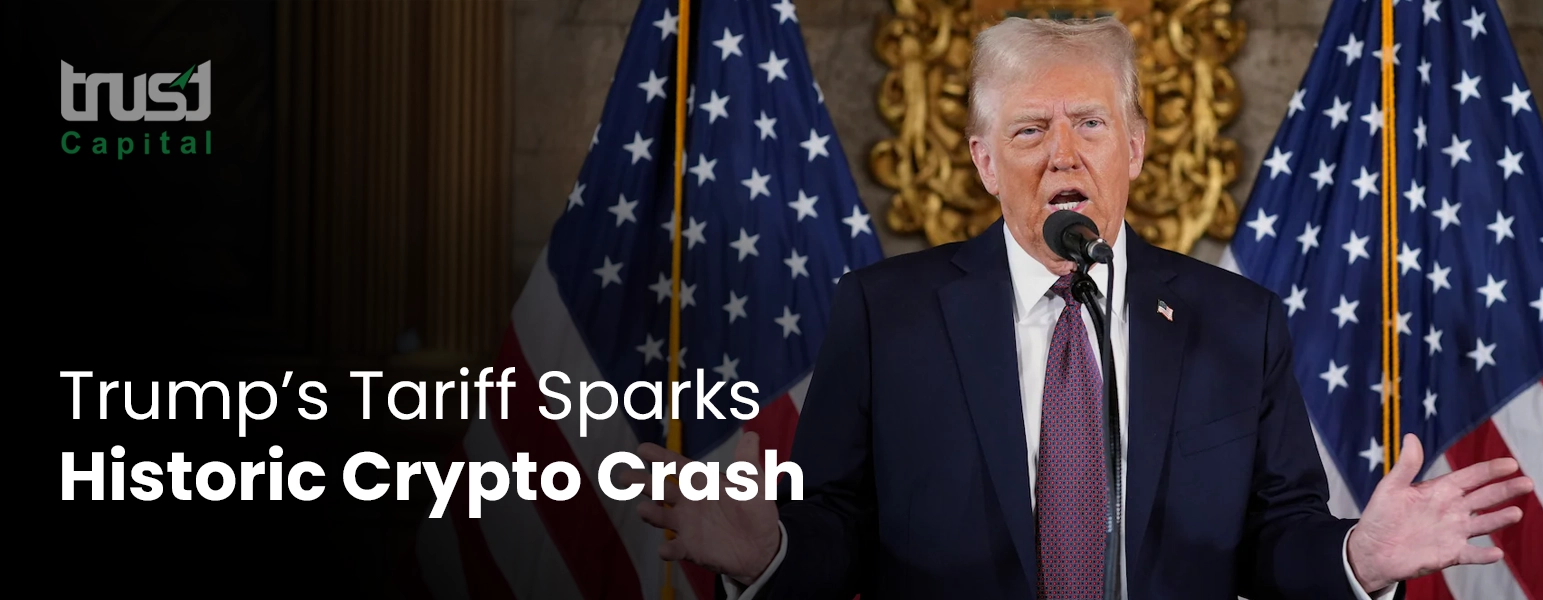
The Day Crypto Collapsed
The world witnessed one of the most historic crypto market crashes in 2025, and the trigger wasn’t a hack or regulatory ban it was a political move.
When former U.S. President Donald Trump announced a 100% tariff on Chinese imports, the global markets shuddered. But nowhere were the effects more violent than in the digital asset market. This event, now known as the “Tariff Shockwaves”, wiped out billions in crypto value overnight, proving once again how macroeconomic decisions can ripple through decentralized markets.
What Triggered the 2025 Crypto Market Crash?
On October 10, 2025, Trump made a surprise declaration of a 100% tariff on all Chinese imports, citing unfair trade practices and intellectual property theft.
This abrupt announcement sent shockwaves through global markets from Wall Street to decentralized exchanges.
Within hours:
-
Bitcoin (BTC) plunged more than 10%.
-
Ethereum (ETH) crashed below $3,500, wiping out weeks of gains.
-
Over $19 billion worth of leveraged crypto positions were liquidated, according to CoinGlass data.
-
More than 1.5 million traders faced forced margin calls in less than 24 hours.
The tariff didn’t just target trade; it targeted global investor confidence and crypto, as a high-risk asset, was first to bleed.
The Tariff Shockwaves Explained

The Tariff Shockwaves refer to the ripple effects caused by Trump’s aggressive trade policy. His move reignited fears of a renewed U.S.–China trade war, leading investors to dump risky assets.
While traditional markets corrected modestly, crypto suffered a flash-crash due to its highly leveraged nature and emotional retail sentiment. The selloff deepened as bots and algorithms triggered mass liquidations, sending prices into a freefall.
In essence, the crypto crash of 2025 was not merely a digital asset problem it was a macro-economic chain reaction. A single tariff decision set off a domino effect of panic selling, liquidation cascades, and fear-driven withdrawals.
Why Did Trump’s Tariff Hit Crypto So Hard?
Crypto investors often underestimate how tightly digital assets are linked to global risk sentiment.
Here’s why Trump’s tariff amplified the 2025 crypto crash:
-
High Leverage and Thin Liquidity
Crypto exchanges like Binance, Bybit, and OKX allow leverage up to 100x. When Bitcoin began dropping, liquidations cascaded amplifying the crash. -
Global Risk-Off Sentiment
The tariff reignited inflation fears, currency volatility, and global recession risk prompting investors to flee speculative assets. -
Institutional Unwinding
Hedge funds and institutional players reduced exposure in Bitcoin ETFs and crypto futures as volatility spiked. -
AI Trading Algorithms
Automated systems detected rising risk and initiated auto-sell programs, worsening price declines across crypto assets. -
Correlation with Tech Stocks
As tech and semiconductor stocks fell due to tariff implications, correlated digital assets like Bitcoin and Solana also nosedived.
Expert Reactions and Market Analysis
Financial experts dubbed the event a perfect storm of geopolitics and speculative mania.
-
Wall Street Journal reported: “Over $19 billion in crypto assets vanished in 24 hours as Trump’s tariff threat reignited trade war fears.”
-
FT wrote: “Trump’s tariff threat sends crypto prices plunging, including his own meme coin.”
-
Analysts from Bloomberg Intelligence called it “a liquidity shock reminiscent of March 2020.”
Crypto influencers were quick to react on X (formerly Twitter), with hashtags like #TariffShockwaves and #CryptoCrash2025 trending worldwide.
How Investors Can Protect Themselves from Future Tariff Shockwaves
The 2025 crash taught crypto traders valuable lessons about macro risk management.
Here’s how to prepare for similar events:
-
Monitor Policy Announcements: Trade wars, sanctions, or tariffs can move crypto markets instantly.
-
Reduce Over-Leverage: High leverage magnifies small policy shocks into total portfolio losses.
-
Diversify Beyond Crypto: Include stable assets like gold, silver, or dividend stocks to cushion volatility.
-
Set Stop-Loss Orders: Automated risk controls prevent total wipeouts during flash crashes.
-
Stay Liquid: Avoid locking all funds in illiquid altcoins during geopolitical uncertainty.
By understanding how tariffs and global politics impact crypto, investors can better navigate volatility and avoid becoming casualties of the next “Tariff Shockwaves.”
Long-Term Impact: A Turning Point for Crypto

While painful, the crypto market crash of 2025 could serve as a reset.
Post-crash, Bitcoin’s hash rate stabilized, and institutional accumulation resumed at lower prices. Some analysts believe the “Tariff Shockwaves” marked the end of an overleveraged cycle and the start of a more mature market.
Moreover, global investors are now forced to acknowledge that crypto is not immune to traditional economics. Inflation, trade policy, and political uncertainty can move digital assets as strongly as tech stocks or currencies.
Conclusion: Lessons from the Tariff Shockwaves
The 2025 Tariff Shockwaves reminded the world that the crypto market, while decentralized, is not detached from global policy. Trump’s tariff announcement served as the spark that ignited a chain reaction one that exposed leverage excess, emotional trading, and systemic fragility.
This event will go down in history as a turning point in cryptocurrency investing, proving that the next major market crash might not come from within crypto but from the geopolitical decisions of world leaders.
For traders and long-term investors alike, one takeaway is clear: In a globalized market, politics and crypto are inseparable.

