The AI Bubble: Boom, Hype, or the Next Market Crash?
Artificial Intelligence is no longer just a tech trend. It has become one of the biggest forces driving global financial markets. From semiconductor giants and cloud computing companies to startups and hedge funds, everyone is racing to capitalize on the AI revolution. Companies connected to artificial intelligence have added trillions of dollars in market value, while terms like Generative AI, Agentic AI, AI Stocks, Nvidia, OpenAI, and Machine Learning dominate headlines across Wall Street and social media.
Why the AI Boom Exploded
The AI surge accelerated after the success of OpenAI and the rapid global adoption of generative AI tools. Businesses quickly realized that AI could transform industries such as automation, healthcare, finance, cybersecurity, software development, customer service, robotics, and content creation. This sparked massive demand for AI chips, GPUs, cloud infrastructure, high-performance computing, and data centers. Companies like Nvidia, AMD, Microsoft, Alphabet, and Meta became major beneficiaries of this technological shift, while investors poured billions into anything connected to artificial intelligence.
AI Stocks and the Semiconductor Gold Rush
Recent blockbuster earnings from AMD reignited optimism in semiconductor stocks and fueled another wave of buying in AI-related companies. Investors believe the AI race is only beginning, and that future demand for advanced computing power could reshape the entire global economy. This excitement has pushed stock markets to record highs and created a powerful narrative that AI may become the most important technological revolution since the internet.
The semiconductor sector has become the backbone of the AI economy. Companies such as Nvidia, AMD, TSMC, Samsung Electronics, and SK Hynix are benefiting from unprecedented demand for GPUs, AI servers, and advanced chips used to train and operate large language models and AI systems.
Is the AI Boom Becoming a Bubble?
Many analysts are beginning to compare the current AI boom to the late-1990s dot-com bubble. Stock valuations are rising much faster than company profits, speculative startups are receiving enormous funding, and many businesses are adding “AI” to their branding to attract investors. Some economists and hedge fund managers have warned that market enthusiasm may be running ahead of reality.
The concern is not that artificial intelligence lacks value, but that investors may be overestimating how quickly companies can generate sustainable profits from AI technologies. Markets are currently pricing many AI firms as if growth will continue exponentially for years without interruption.
Why This AI Boom Is Different from the Dot-Com Era
Despite bubble fears, there are important differences between today’s AI boom and the dot-com era. During the internet bubble, many companies had little or no revenue and relied heavily on speculative funding. Today’s AI leaders are some of the most profitable corporations in the world.
Cloud computing demand is real, enterprises are actively paying for AI services, and global semiconductor demand continues to surge. Unlike the dot-com period, much of today’s AI infrastructure spending is being funded by financially powerful companies with enormous cash reserves.
The Global Impact of Artificial Intelligence
Artificial intelligence is already having a measurable impact on the global economy. Businesses are using AI to improve productivity, automate repetitive tasks, enhance cybersecurity, analyze massive amounts of data, and create new digital products. The AI race is also reshaping geopolitics, semiconductor supply chains, energy demand, and global technology competition.
Countries around the world are investing heavily in AI infrastructure because artificial intelligence is increasingly viewed as a strategic technology similar to nuclear power, oil, or the internet in previous decades.
The Biggest Risk Facing AI Markets
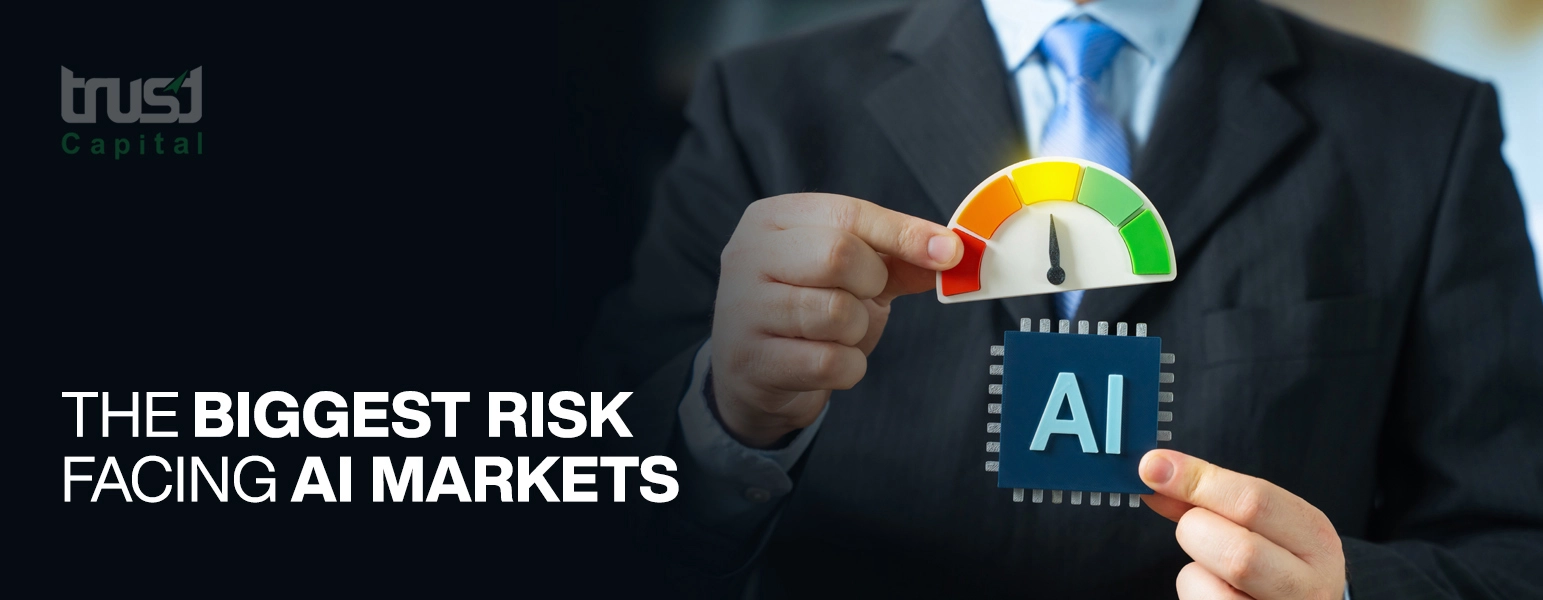
The biggest risk facing the AI market may be the gap between expectations and reality. History shows that no sector rises forever without corrections. If AI monetization slows, regulations increase, economic conditions weaken, or infrastructure demand cools, AI-related stocks could face major declines.
Researchers have already started warning about signs of excessive optimism and valuation risks in AI-exposed equities. Many investors fear that a future AI correction could trigger a broader tech market selloff similar to previous market bubbles.
Boom, Hype, or the Future of Technology?
The truth is that AI can be both a genuine technological revolution and a speculative bubble at the same time. The internet changed the world permanently, but the dot-com crash still wiped out trillions of dollars in market value. Artificial intelligence may follow a similar path. Some companies could become the next global tech giants, while others may disappear once market hype fades.
Conclusion
The AI revolution is real, and it is already transforming industries faster than almost any technology in modern history. Investors are betting that artificial intelligence will define the next decade of economic growth and innovation. They may be right. But when markets become driven by fear of missing out, extreme optimism, and trillion-dollar expectations, volatility becomes unavoidable.
The biggest winners of the AI era may not simply be the companies with the best technology, but the companies that can turn AI hype into sustainable long-term profits.