The Impact of an Oil Crisis on Gold Prices: Understanding the Oil–Gold Relationship
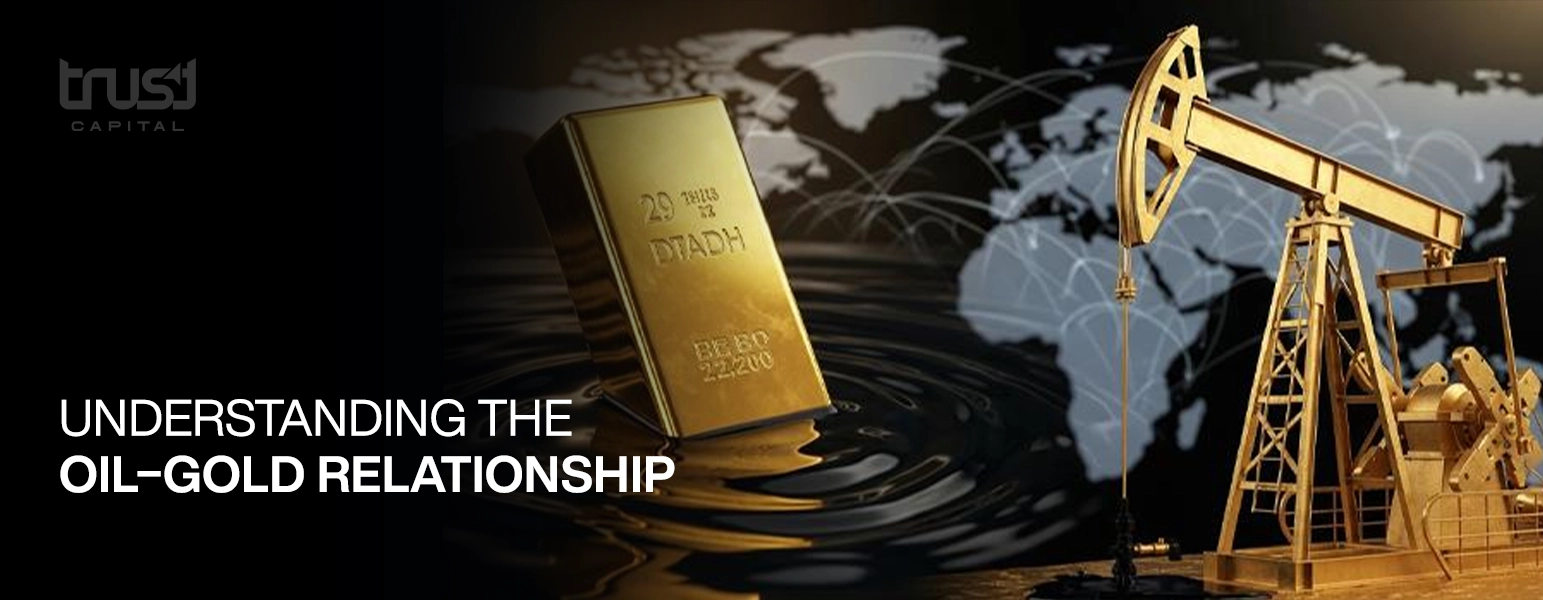
Oil and gold are two of the most closely watched commodities in global financial markets. While they serve very different purposes, both can react strongly to inflation, geopolitical tensions, currency movements, interest rates, and changes in investor sentiment. This makes the oil gold correlation an important relationship for traders and investors to understand.
An oil crisis can have a particularly interesting effect on gold prices. A sharp rise in crude oil prices can increase inflation expectations, influence central-bank policy, weaken economic growth, and increase demand for safe-haven assets such as gold. However, the relationship is not always straightforward.
Understanding how these commodities interact can help investors interpret oil gold market trends, assess the oil crisis market impact, and identify potential opportunities in the oil gold market in 2026.
What Is the Oil–Gold Correlation?
The oil gold correlation refers to the relationship between movements in crude oil prices and gold prices. Historically, the two commodities have often moved in the same general direction during periods of inflation and geopolitical uncertainty, but the strength and direction of the relationship can change over time.
One important reason for this relationship is inflation.
Crude oil is a major input cost for transportation, manufacturing, electricity generation, and many other areas of the global economy. When oil prices rise significantly, companies can face higher production and transportation costs. These costs can eventually feed into consumer prices.
Gold, meanwhile, is traditionally viewed as a store of value and a potential hedge against inflation and economic uncertainty.
As a result, an oil price shock can sometimes create conditions that support higher gold prices.
However, higher oil prices do not automatically mean higher gold prices. The impact depends on what is driving the oil rally and how financial markets respond.
How Does an Oil Crisis Affect Gold Prices?
An oil crisis can influence gold through several different channels.
1. Higher Inflation Expectations
One of the most direct links between oil and gold is inflation.
When crude oil prices rise sharply, energy costs increase throughout the economy. If investors expect inflation to remain elevated, demand for assets that can preserve purchasing power may increase.
Gold can benefit from this environment.
For example, if an oil supply disruption causes crude prices to surge, markets may begin pricing in higher inflation. Investors may consequently increase their exposure to gold, contributing to upward pressure on XAU/USD.
This is one of the most important mechanisms behind the oil crisis gold impact.
2. Geopolitical Uncertainty
Oil crises are frequently connected to geopolitical events.
The Middle East, Russia, major oil-producing countries, shipping routes, and other strategically important regions can have a significant influence on global energy markets.
When geopolitical tensions threaten oil production or transportation, crude prices can rise rapidly. At the same time, investors may become more cautious and seek traditional safe-haven assets.
Gold is one of the assets that can attract this defensive demand.
Therefore, the oil crisis market impact can extend beyond energy markets and influence currencies, equities, bonds, and precious metals.
3. Central-Bank Policy
An oil shock can create a difficult situation for central banks.
Higher energy prices can push inflation higher, potentially encouraging central banks to maintain restrictive monetary policy for longer. Higher interest rates and rising bond yields can increase the opportunity cost of holding non-yielding gold.
This can limit the positive effect of inflation on gold.
On the other hand, if an oil crisis causes a significant slowdown in economic growth, central banks could eventually respond with easier monetary policy.
Lower interest rates and falling real yields can provide stronger support for gold.
This explains why the top oil gold impact is not always immediate. Gold's response can evolve as markets reassess inflation, economic growth, interest rates, and monetary policy.
Oil Prices Can Create Both Inflation and Recession Risks
One of the most important aspects of an oil crisis is its potential to create two opposing economic forces.
Higher oil prices can initially create inflation.
But if oil prices remain elevated for a prolonged period, consumers and businesses may reduce spending because more money is being spent on energy.
This can weaken economic activity.
The result can be a combination of:
-
Higher inflation
-
Slower economic growth
-
Reduced consumer spending
-
Higher production costs
-
Greater geopolitical uncertainty
-
Increased market volatility
This environment is sometimes referred to as stagflation.
Gold can perform relatively well during periods of economic uncertainty and persistent inflation, although its performance will still depend on interest rates, the US Dollar, bond yields, and investor positioning.
Oil Gold Market Trends: What Traders Should Watch
When analysing oil gold market trends, traders should avoid looking at crude oil and gold in isolation.
Several additional indicators are particularly important.
US Dollar
Gold is primarily priced in US Dollars. A stronger Dollar can make gold more expensive for international buyers and may put downward pressure on XAU/USD.
An oil crisis can sometimes strengthen the Dollar because investors seek liquidity and safety. In other circumstances, concerns about inflation or US economic conditions can weaken the currency.
Therefore, watching the Dollar is essential when evaluating the gold oil impact.
US Treasury Yields
Gold does not generate interest income. Consequently, changes in bond yields can significantly influence investor demand.
If an oil shock causes inflation expectations and Treasury yields to rise sharply, gold may initially struggle.
However, if the oil crisis eventually leads to expectations of weaker economic growth and lower interest rates, falling yields can become supportive for gold.
Real Interest Rates
Real yields are particularly important for gold.
When real yields decline, the opportunity cost of holding gold can decrease. This can make precious metals more attractive to investors.
Equity Markets
A severe oil crisis can increase pressure on stocks, particularly companies with high energy costs.
If investors move away from riskier assets and toward defensive assets, gold may receive additional support.
Historical Oil Crisis Gold Impact
History provides several examples of how oil shocks and gold can interact.
During major oil crises, crude prices have often risen because of supply disruptions or geopolitical developments. These episodes have also been associated with increased inflation concerns and economic uncertainty.
However, gold has not responded identically during every crisis.
The reason is that financial markets are influenced by multiple variables simultaneously.
For example, an oil shock accompanied by rapidly rising interest rates could be less supportive for gold than an oil shock accompanied by falling real yields and increased safe-haven demand.
This is why traders should focus on the broader macroeconomic environment rather than assuming that a rise in oil will automatically produce an equivalent rise in gold.
Oil Gold Trends 2026: What Could Influence the Relationship?
The oil gold trends 2026 narrative is likely to remain heavily influenced by several major themes, including geopolitical developments, global inflation, central-bank policy, economic growth, and energy-market supply conditions.
For traders following the oil gold market 2026, the key question is not simply whether oil prices are rising or falling.
Instead, traders should ask:
Why are oil prices moving?
If crude oil is rising because of a major supply disruption, the initial reaction could include higher inflation expectations and increased geopolitical risk. This combination may support gold.
If oil is rising because global economic demand is exceptionally strong, the impact on gold could be different because stronger growth may support higher interest rates and bond yields.
Likewise, if oil prices collapse because of a global recession, gold could still rise if investors expect lower interest rates and seek safe-haven assets.
This demonstrates why the oil gold effect 2026 should be analyzed through the broader macroeconomic environment.
Oil Crisis Impact on Other Financial Markets
An oil crisis rarely remains limited to the energy market.
Stock Markets
Higher energy costs can reduce corporate profit margins, particularly for industries that depend heavily on transportation and fuel.
Currency Markets
Oil-importing countries can face increased import costs and pressure on their currencies, while major oil exporters may benefit from higher export revenues.
Bond Markets
An oil shock can increase inflation expectations and potentially push bond yields higher. Later, concerns about economic growth may reverse that move.
Gold and Precious Metals
Gold can benefit from inflation fears, geopolitical uncertainty, safe-haven demand, and lower real yields. However, stronger bond yields and a stronger US Dollar can limit gains.
This interconnectedness makes the top oil crisis impact an important consideration for anyone trading global markets.
Gold and Oil: Does Gold Always Follow Oil?
No.
There is no permanent one-to-one relationship between crude oil and gold.
The oil gold correlation can strengthen during certain periods and weaken or even become negative during others.
How Traders Can Use the Oil–Gold Relationship
The oil–gold relationship can be useful as part of a broader market-analysis framework.
A trader could monitor:
-
WTI and Brent crude prices
-
XAU/USD
-
US Dollar Index
-
US Treasury yields
-
Inflation expectations
-
Central-bank interest-rate expectations
-
Geopolitical developments
-
Global equity-market performance
For example, if crude oil suddenly rises because of a geopolitical supply disruption while Treasury yields fall and safe-haven demand increases, the environment could become increasingly supportive for gold.
However, traders should wait for confirmation from price action and other macroeconomic indicators rather than relying solely on the oil move.
Conclusion
An oil crisis can have a significant impact on gold prices, but the relationship is not as simple as "oil rises, therefore gold rises."
The oil gold correlation is driven by several interconnected forces, including inflation, interest rates, Treasury yields, the US Dollar, economic growth, and geopolitical risk.
For the oil gold market 2026, investors should pay close attention to the reason behind major oil-price movements and how those movements influence inflation expectations and monetary policy.
The most useful approach is to monitor crude oil alongside gold, the US Dollar, bond yields, and central-bank expectations. By understanding these relationships, traders can better interpret oil gold market trends, evaluate the oil crisis impact, and develop a more informed view of potential gold oil impact in changing market conditions.
Ultimately, oil can provide an important signal about inflation and global economic conditions—but gold's next major move will depend on how the entire macroeconomic picture develops.